China has become a major sourcing base for cell equipment used in battery manufacturing. Its supplier network covers coating, calendaring, slitting, winding, stacking, formation, testing, and automation systems. For global buyers, the challenge is not simply finding a low quotation. It is verifying whether each supplier can deliver stable performance, documented quality, and dependable after-sales support.
This guide examines leading Chinese cell equipment suppliers through practical purchasing criteria. We consider manufacturing experience, equipment specifications, project references, certification practices, and production-line integration. Factory visits can reveal details that brochures often hide, such as uneven coating edges, exposed wiring, or poorly labeled control cabinets. These small signs matter.
Real performance matters more.
Buyers should also review installation procedures, spare-parts availability, software support, operator training, and response times across different time zones. A supplier may offer impressive throughput, yet struggle with commissioning or process consistency. That possibility deserves attention. Public information can also be incomplete, outdated, or presented selectively. Therefore, supplier claims should be checked against test reports, customer references, sample runs, and signed technical agreements.
The companies discussed here are not ranked only by size or export visibility. Their suitability depends on cell chemistry, factory scale, target capacity, budget, and local compliance requirements. A supplier experienced with cylindrical cells may not be the best choice for pouch-cell production. Careful comparison reduces avoidable delays, unexpected modification costs, and long-term maintenance risks. This overview aims to support informed decisions, while recognizing that no equipment list can replace technical due diligence.
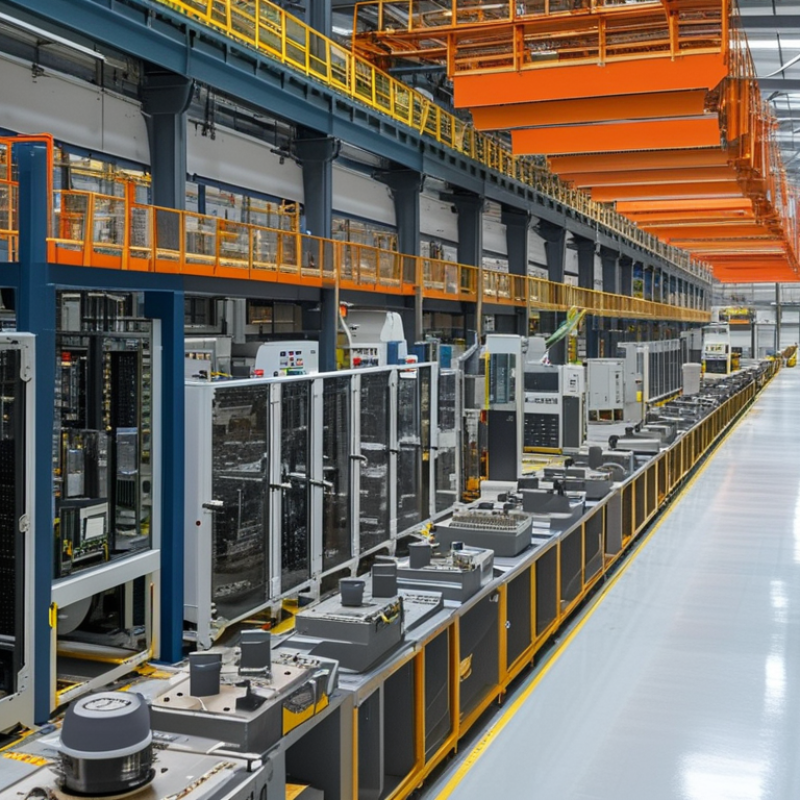
China’s cell equipment market covers nearly every stage of lithium-ion battery production. Key segments include slurry mixing, coating, drying, calendaring, slitting, winding, stacking, formation, testing, and recycling. The IEA’s Global EV Outlook 2024 reports that China produced over 80% of global battery cells in 2023. This manufacturing base supports strong demand for integrated and highly automated equipment.
China’s equipment suppliers serve passenger vehicles, commercial transport, energy storage, and consumer electronics. Export projects increasingly require stable cycle times, precise coating thickness, low defect rates, and documented safety controls. IEA data also shows China supplied about 85% of global cathode active materials and over 90% of anode materials in 2023. This concentration strengthens local equipment ecosystems, from process engineering to spare-parts support. Global buyers often gain shorter delivery routes and faster technical adjustment.
The picture is not perfect. Capacity figures from industry reports are difficult to compare because some count planned lines, while others count operating factories. That difference matters. A practical evaluation should examine verified output, equipment uptime, validation records, and after-sales response. The European Battery Alliance and other industry studies continue to stress traceability, quality consistency, and responsible supply chains. China’s global role is therefore broader than equipment exports. It is becoming a testing ground for faster, denser, and more automated cell production. Progress remains uneven, especially for overseas installation and local compliance.
| Market scope | Equipment segment | Representative equipment | Main manufacturing function | Key control priorities | Global role of China |
|---|---|---|---|---|---|
| Electrode manufacturing | Slurry preparation | Vacuum mixers, dispersers, powder feeding systems | Disperses active materials, conductive additives, binders, and solvents into a uniform slurry | Viscosity, solids content, dispersion uniformity, contamination control | China has a large domestic battery-production base, supporting extensive process-equipment integration |
| Electrode manufacturing | Coating and drying | Slot-die coaters, comma coaters, drying ovens, solvent-recovery systems | Applies active slurry to metal foil and removes solvent under controlled conditions | Coating weight, thickness profile, web tension, drying uniformity, solvent recovery | Chinese equipment is used across both domestic lines and overseas projects requiring localized line deployment |
| Electrode manufacturing | Calendering and slitting | Roll presses, precision slitters, edge-trimming systems | Controls electrode density and dimensions before cell assembly | Compaction density, porosity, thickness tolerance, burr control, edge quality | The segment benefits from China’s mature battery supply chain and high-volume manufacturing experience |
| Cell assembly | Winding and stacking | Winding machines, Z-folding stackers, lamination and alignment systems | Builds electrode-separator assemblies for cylindrical, prismatic, or pouch cells | Alignment accuracy, separator tension, tab position, particle prevention | China is a major source of high-throughput assembly solutions for lithium-ion cell lines |
| Cell assembly | Packaging and sealing | Can-forming presses, pouch-forming machines, sealing systems, electrolyte filling units | Encapsulates the cell, introduces electrolyte, and creates a controlled internal environment | Leak tightness, fill accuracy, moisture level, seal strength, dimensional consistency | Integrated packaging and filling equipment is widely connected with China’s complete cell-production ecosystem |
| Formation and aging | Formation, grading, and aging systems | Formation cabinets, battery testers, aging racks, thermal-control units | Activates the electrochemical system and evaluates cell performance before shipment | Voltage and current accuracy, temperature uniformity, cycle data, capacity grading | China supplies large-scale formation and testing infrastructure for high-volume production lines |
| Inspection and automation | Machine vision and defect detection | Vision inspection, X-ray inspection, laser measurement, barcode traceability | Detects dimensional, surface, alignment, weld, and internal-structure defects | Detection sensitivity, false-rejection rate, data traceability, inspection repeatability | Automation and digital traceability are increasingly important as Chinese suppliers serve overseas gigafactory projects |
| Factory infrastructure | Dry-room and environmental systems | Dehumidification systems, cleanrooms, HVAC, solvent-handling equipment | Maintains low-moisture and controlled environmental conditions for sensitive battery processes | Dew point, temperature, particle level, airflow balance, energy consumption | China’s broad industrial-equipment base supports turnkey and modular factory-infrastructure projects |
| Market and trade segment | Export-oriented cell-equipment solutions | Standalone machines, integrated production modules, turnkey line packages | Transfers production capability, process know-how, commissioning support, and after-sales services | Localization, installation support, spare-parts availability, compliance, cybersecurity, service response | The IEA reported that China produced nearly 80% of global battery cells in 2023 and held about 85% of global battery-cell manufacturing capacity, giving Chinese equipment suppliers a significant domestic reference market |