Why Cell Culture is Essential for Biomedical Research and Drug Development
Cell culture is a cornerstone technique in the fields of biomedical research and drug development. Through the growth and maintenance of living cells in controlled environments, researchers can observe cellular behavior, understand complex biological processes, and explore disease mechanisms. This in vitro approach allows for the manipulation of variables in ways that are not possible in whole organisms, making it an indispensable tool for the study of cell biology and molecular interactions.
In recent years, the significance of cell culture has only grown, especially with advancements in personalized medicine and targeted therapies. By utilizing various cell lines, researchers can assess the efficacy and safety of new drugs before they advance to clinical trials, thereby reducing the risks associated with human testing. Furthermore, cell culture is instrumental in understanding how diseases develop and progress, which is critical for identifying potential therapeutic targets.
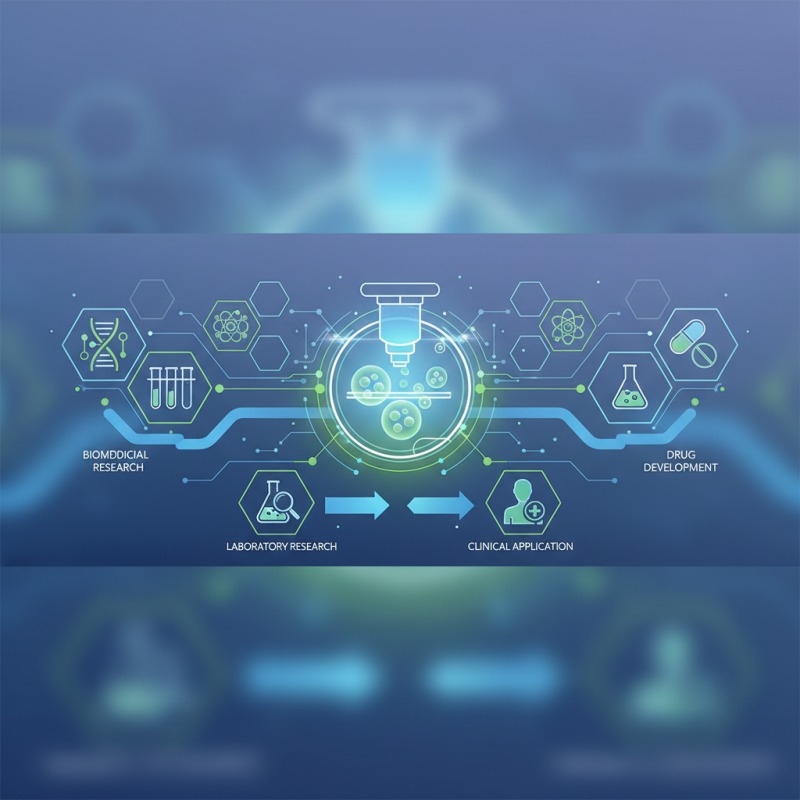
Overall, cell culture is essential for advancing our understanding of biological systems and improving healthcare outcomes. It provides a controlled framework for experimentation and innovation, bridging the gap between laboratory research and clinical application. The continued development of cell culture techniques promises to enhance our ability to tackle some of the most pressing health challenges of our time.
The Role of Cell Culture in Advancing Biomedical Research
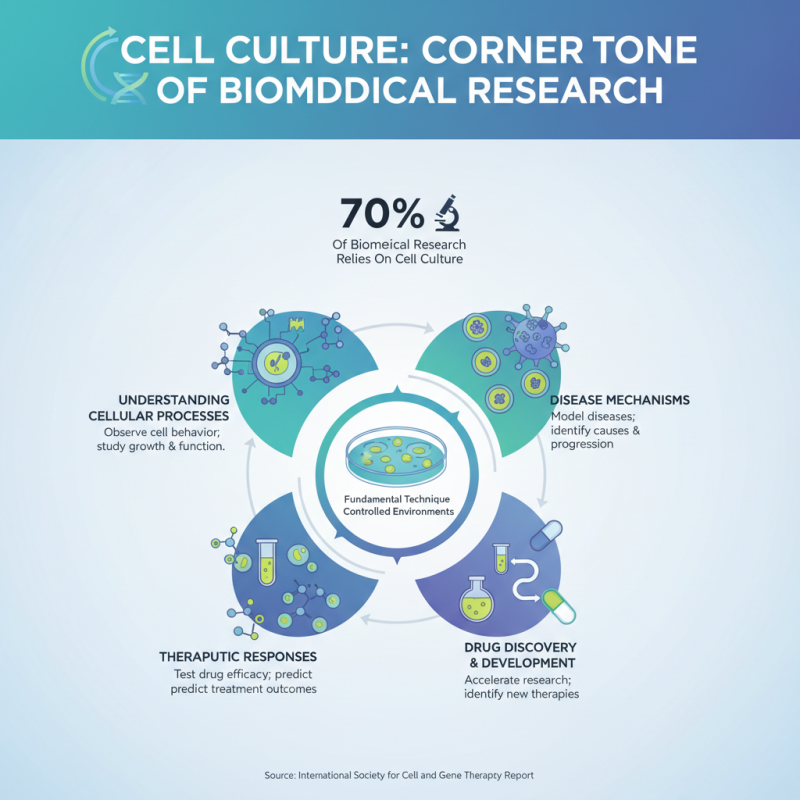
Cell culture plays a pivotal role in advancing biomedical research, serving as a fundamental technique for understanding cellular processes, disease mechanisms, and therapeutic responses. According to a report from the International Society for Cell and Gene Therapy, approximately 70% of all biomedical research relies on cell culture techniques, highlighting their significance in drug discovery and development. This method allows researchers to create controlled environments where they can manipulate variables and observe cellular behaviors, leading to crucial insights into biological responses and treatment efficacies.
Moreover, cell cultures provide a platform for high-throughput screening, which is essential in the drug development process. A study published by the National Institutes of Health indicates that cell-based assays are used in over 90% of drug screening efforts, underscoring their importance in identifying potential therapeutic candidates. By utilizing various types of cell lines to model diseases, such as cancer and neurological disorders, researchers can assess the impact of novel compounds effectively, thereby accelerating the translation of basic research into clinical applications. The ability to conduct experiments in vitro not only reduces the reliance on animal models but also streamlines the path to human clinical trials.
Types of Cell Cultures Used in Biomedical Studies
Cell culture is a cornerstone of biomedical research, providing a controlled environment for studying cellular behaviors, drug responses, and the mechanisms of diseases. Among the different types of cell cultures, two primary categories stand out: adherent and suspension cultures. Adherent cultures involve cells that adhere to a surface, often used for studying cell morphology, migration, and interaction, as these conditions mimic in vivo environments. In contrast, suspension cultures allow cells to grow freely in a medium, making them particularly effective for large-scale production of proteins, vaccines, and for studying blood-related diseases like leukemia.
Recent studies indicate that the global market for cell culture is expected to reach over $21 billion by 2026, driven by advancements in drug development and regenerative medicine. Notably, stem cell cultures are garnering attention in biomedical research, with potential applications ranging from regenerative therapies to personalized medicine. Furthermore, 3D cell cultures, which offer a more physiologically relevant environment than traditional 2D cultures, have shown promise in enhancing drug testing accuracy, with reports indicating a 40% increase in predictive capacity for human responses in preliminary trials.
**Tip**: When choosing a cell culture type for your research, consider the specific requirements of your study. Adherent cultures may be more suitable for investigations focused on cellular interactions, while suspension cultures excel in studies aiming for scalability. Furthermore, incorporating 3D culture techniques can significantly enhance the relevance of your experimental outcomes.
Types of Cell Cultures Used in Biomedical Research
This chart represents the number of studies conducted using different types of cell cultures in biomedical research. Each type of cell culture plays a critical role in understanding biological processes and developing new therapeutics.
Applications of Cell Culture in Drug Development Processes
Cell culture technology has become an indispensable tool in the field of drug development, significantly enhancing the efficiency and effectiveness of research processes. According to a report by Grand View Research, the global cell culture market is anticipated to reach approximately $26.2 billion by 2025, signifying a robust demand for cell-based assays in various applications. Cell culture systems allow researchers to cultivate and manipulate cells in a controlled environment, which is critical for understanding cellular responses to potential therapeutic compounds and assessing their safety and efficacy before clinical trials.
In drug development, cell culture plays a crucial role at several stages, including drug screening, pharmacokinetics, and toxicity testing. For instance, the use of 3D cell culture models has gained traction due to their ability to more accurately simulate in vivo conditions, thereby facilitating improved predictions of drug behavior in human tissues. A study published in "Nature Reviews Drug Discovery" highlighted that utilizing 3D cell cultures can enhance the drug development process by up to 30%, allowing researchers to identify lead candidates more efficiently while reducing the reliance on animal testing. Thus, the integration of advanced cell culture techniques not only accelerates the drug development timeline but also aligns with regulatory trends favoring more humane and effective testing methods.
Challenges and Limitations of Cell Culture in Research
Cell culture plays a pivotal role in biomedical research and drug development, yet it is not without its challenges and limitations. One significant issue is the complexity of replicating the in vivo environment that cells experience within a living organism. Cells in culture often behave differently than they would in their natural setting, leading to potential discrepancies in the responses observed during experimental procedures. Factors such as altered cell signaling pathways, changes in gene expression, and variations in metabolic activities can limit the predictive value of cell culture models for drug efficacy and safety.
Another challenge is the issue of cellular heterogeneity and the potential loss of functionality over time. As cell lines are passaged and proliferated, they may undergo genetic drift, leading to a selection of clones that do not accurately reflect the original tissue or tumor characteristics. This can skew results, particularly in cancer research, where the interaction between different cell types is critical for understanding tumor progression and treatment response. Additionally, the reliance on a limited number of cell lines can result in a lack of diversity in research, hindering the generalizability of findings across different populations and disease states. Addressing these limitations is essential for advancing the reliability of cell culture as a foundational tool in biomedical research.
Why Cell Culture is Essential for Biomedical Research and Drug Development - Challenges and Limitations of Cell Culture in Research
| Dimension |
Description |
Challenges |
Limitations |
| Cell Line Selection |
Choosing appropriate cell lines for specific research objectives. |
Variability in cell line characteristics can affect results. |
Not all cell lines accurately represent in vivo conditions. |
| Growth Conditions |
Optimization of media, temperature, and atmosphere for cell growth. |
Diverse growth requirements can complicate experiments. |
Adaptation to unnatural growth conditions may alter cell behavior. |
| Reproducibility |
Consistency in experiments conducted across different laboratories. |
Variations in protocols can lead to different outcomes. |
Difficulty in achieving identical results can hinder progress. |
| Ethical Considerations |
Ethical sourcing and use of human cells in research. |
Obtaining informed consent from donors can be complex. |
Ethical dilemmas regarding the use of embryonic stem cells. |
| Scale-Up |
Transitioning from small-scale experiments to larger applications. |
Challenges in maintaining cell viability and function at scale. |
Large-scale cultures may not mimic physiological conditions accurately. |
Future Trends in Cell Culture Technology for Medicine
The future of cell culture technology presents exciting horizons for medicine, driven by advanced methodologies and innovative tools. According to a recent report by Grand View Research, the global cell culture market is projected to reach $40.5 billion by 2027, growing at a compound annual growth rate (CAGR) of 11.7%. This surge is primarily fueled by the increasing need for effective drug development processes and personalized medicine, which rely heavily on robust in vitro models. As researchers seek to mimic the in vivo environment more accurately, technologies such as 3D cell culture and organ-on-a-chip systems are becoming prevalent. These approaches not only enhance cell-to-cell interactions but also improve the predictive ability of drug responses, thus reducing the reliance on animal testing.
Moreover, advancements in bioprinting and automated cell culture systems are poised to propel research and development. A study from Research and Markets indicates that the bioprinting segment alone could witness a CAGR of 20.2% from 2022 to 2030. With automation and artificial intelligence integrated into cell culture practices, researchers can achieve higher throughput and more consistent results. These tools enable the large-scale screening of drug candidates and facilitate the study of disease mechanisms in unprecedented detail. As technologies continue to evolve, the landscape of cell culture is not only expanding but also becoming increasingly integral to the development of novel therapeutics and regenerative medicine.